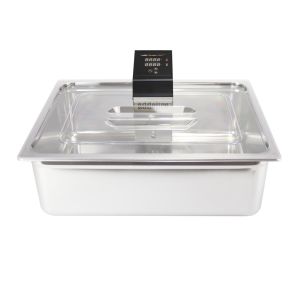
Sous vide cooking in a water bath is an excellent way to maintain precise cooking temperatures. However, when a water bath operates for several hours, sometimes overnight, part of the energy consumed is lost as heat.
How can these heat losses be reduced and electricity consumption optimised? The first solution is to limit water evaporation. The second, often overlooked, is to insulate the sides of the container.
To address this issue, Sous Vide Consulting developed the SWISL insulation cover, made from 5 mm thick neoprene, for professional sous vide water baths. We also carried out an infrared camera test to demonstrate its effectiveness.
Why does a sous vide water bath lose energy?
During sous vide cooking, water gradually evaporates from the bath, even at relatively low temperatures. This evaporation causes energy loss: the immersion circulator must continue heating to maintain the programmed water temperature.
The longer the cooking time and the higher the water temperature, the greater these losses can become. This is particularly noticeable during overnight cooking or high-temperature preparations, such as certain pasteurisation processes involving glass jars.
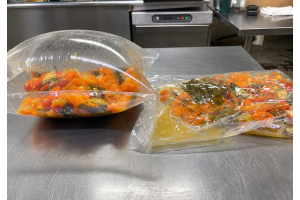
A falling water level can also create a food safety issue. If some vacuum-sealed bags are no longer fully submerged, the food may not remain at the intended cooking temperature.
The first precaution is therefore to always cover the water bath. A suitable lid limits evaporation, reduces heat loss from the water surface and helps maintain a stable water level throughout the cooking process.
Are floating plastic balls suitable for sous vide cooking?
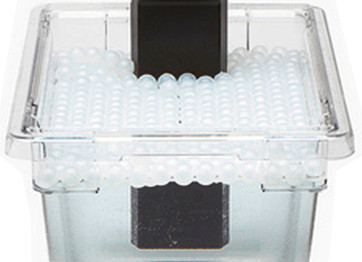
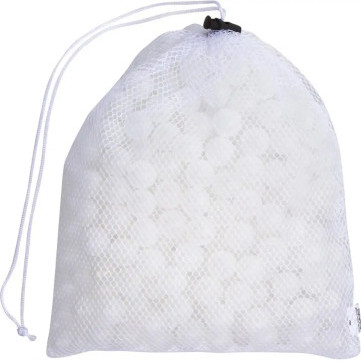
Some users cover the surface of their water bath with floating plastic balls. This technique effectively reduces the area of water exposed to the air and therefore limits evaporation.
In professional kitchens, however, this solution has several disadvantages. The balls must be cleaned regularly, as grease, limescale and other deposits can accumulate on their surfaces. Cleaning numerous individual balls is also more time-consuming than cleaning a simple lid.
Another practical inconvenience occurs when using tongs to remove vacuum-sealed bags from the water bath: a plastic ball can easily become trapped between the two arms of the tongs. This quickly becomes frustrating during daily use.
For professional use, we recommend a rigid lid adapted to the container and the immersion circulator.
Plastic wrap: an effective solution for small water baths
For small water baths, plastic wrap suitable for the operating temperature can be a simple and economical solution. Slightly moistening the edges of the container helps the film adhere and creates a relatively tight seal.
This method effectively reduces evaporation but becomes less practical when water baths are used intensively or when large containers, particularly GN 1/1 and GN 2/1 sizes, are involved.
In these situations, a rigid lid with a suitable opening for the immersion circulator is generally a more durable and convenient solution.
A lid is not always enough for long or high-temperature cooking
A lid reduces energy losses caused by water evaporation. However, it does not eliminate heat loss through the sides and bottom of the container.
These losses can become significant when the water bath operates for several hours at high temperatures. This is particularly relevant for overnight cooking, food preparation in glass jars or production kitchens operating several immersion circulators simultaneously.
To further improve energy efficiency, insulating the stainless steel gastronorm container itself is therefore worth considering.
Double-walled water baths: effective but expensive
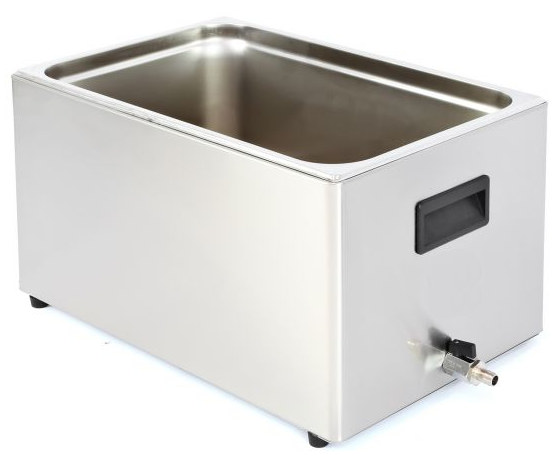
Double-walled containers specifically designed to reduce heat loss are available. Their insulation can be highly effective, and some models include a drain valve, which is particularly useful for emptying the water after use.
However, these products have two main disadvantages: their price, which can reach several hundred euros, and their size. They are also heavier than standard stainless steel gastronorm containers.
For professionals who already own GN containers, replacing their entire installation with insulated tanks therefore represents a substantial investment.
The SWISL insulation cover: a simple way to reduce heat loss
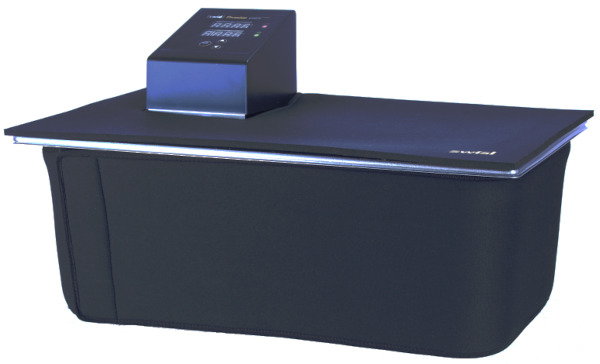
To provide an alternative to double-walled containers, Sous Vide Consulting developed the SWISL insulation cover, made from 5 mm thick neoprene.
This cover is specifically designed for GN 1/1 and GN 2/1 gastronorm containers with a depth of 200 mm. It insulates the sides of the container and complements the lid to reduce heat loss.
The neoprene creates an insulating barrier between the metal walls of the water bath and the surrounding air. As a result, the immersion circulator requires less energy to compensate for heat loss and maintain the cooking temperature.
This insulation also improves working conditions: by reducing the heat released by the containers, it helps prevent excessive warming of the kitchen environment.
Imagine a production kitchen with five water baths operating at 70°C...
In a professional production kitchen, five water baths maintained at 70°C for ten hours a day represent a significant source of heat.
Without insulation, part of the electricity consumed is released directly into the room as heat. This can make working conditions uncomfortable and increase ventilation or air-conditioning requirements.
By insulating the containers, both heat loss and the amount of heat released into the kitchen can be reduced.
Our infrared camera test: a remarkable temperature difference
How effective is the SWISL insulation cover?
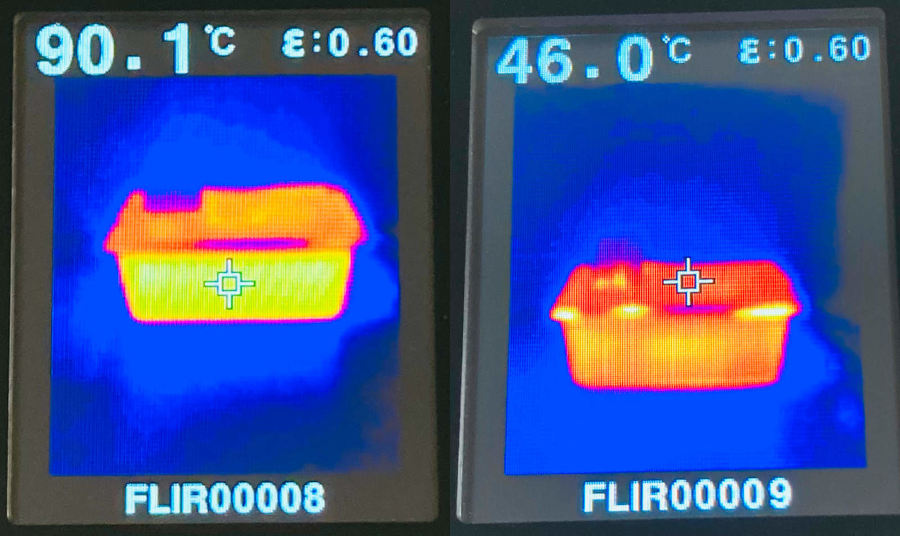
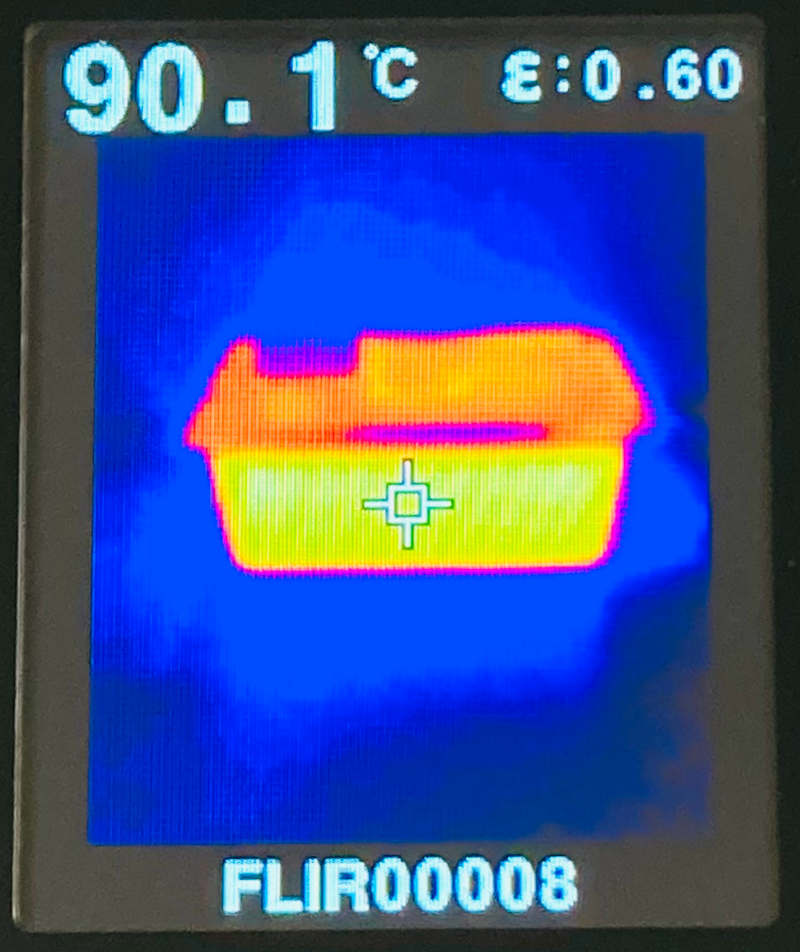
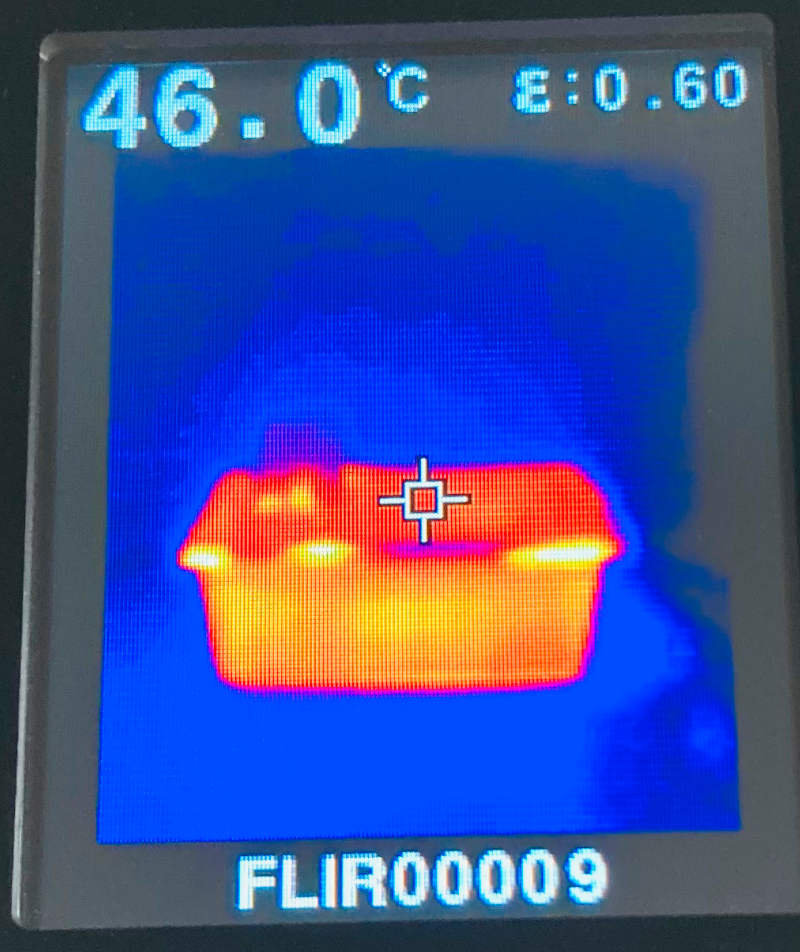
To demonstrate the performance of our neoprene insulation cover, we carried out an infrared camera test using a 28-litre GN 1/1 gastronorm container, with the water maintained at 90°C.
This temperature is particularly high for conventional sous vide cooking. However, it clearly highlights heat loss through the walls of the container.
The infrared images show a remarkable difference between an uninsulated container and a comparable container fitted with our SWISL insulation cover.
Comparison of external surface temperatures
The measured external surface temperature drops from approximately 90°C without insulation to 46°C with the SWISL cover, a difference of 44°C.
This result illustrates the effectiveness of the neoprene insulation and the substantial reduction in the surface temperature exposed to the surrounding environment.
Reduce electricity consumption by 45–50% with effective insulation
Insulating a water bath does more than improve thermal comfort. It also reduces the energy required to maintain the water at the programmed temperature.
The SWISL insulation cover reduces the electricity consumption required to maintain the water bath temperature by 45–50%.
Source: comparative measurements carried out by Sous Vide Consulting using an electricity consumption meter (wattmeter), with and without the SWISL insulation cover.
For professionals who use their water baths every day, this reduction represents a particularly attractive economic benefit. The savings become increasingly significant during long cooking cycles, at high temperatures or when several appliances operate simultaneously.
There is also an indirect benefit: by reducing the heat released into the production kitchen, insulation can help reduce the need for room cooling.
How is the SWISL insulation cover designed?
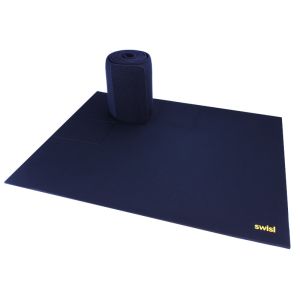
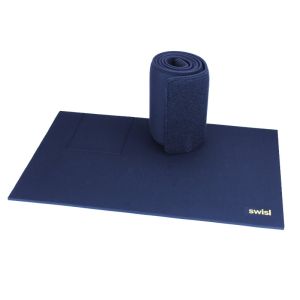
Our 5 mm neoprene insulation cover consists of two main components, with a third optional component available.
An insulating sleeve around the container
The first component is a neoprene sleeve that surrounds the sides of the gastronorm container. It closes with a wide hook-and-loop fastening strip, making it easy to install and remove.
This sleeve provides the main lateral insulation of the water bath.
Additional insulation above the lid
The second component is placed over the container lid. It complements the side insulation by reducing heat loss through the upper surface.
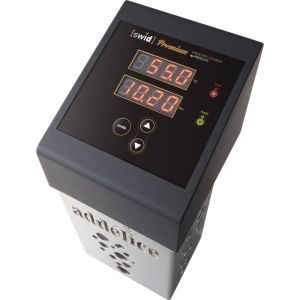
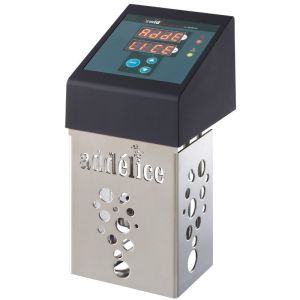
A stitched outline indicates the area designed to be cut out for SWID and SWID Premium immersion circulators.
This opening is intentionally not pre-cut. Users can therefore make an opening that fits their particular immersion circulator, including appliances from other manufacturers.
Optional insulation underneath the container
A third neoprene component can be placed beneath the container to reduce heat transfer to the worktop.
This option is particularly useful when the water bath rests on stainless steel, stone or wooden surfaces. It completes the insulation of the container and limits heat transfer to the supporting surface.
An insulation cover that can also help keep food cool
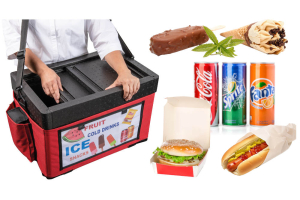
The SWISL cover can also be used to slow down the warming of chilled food placed in a gastronorm container, for example during short-distance transport.
The principle is similar to that of an insulated food transport box or thermal container: insulation slows heat transfer between the contents and the surrounding air.
However, this additional application does not replace refrigerated equipment when maintaining the cold chain is necessary.
Conclusion: an effective solution for reducing sous vide electricity consumption
To reduce the electricity consumption of a sous vide water bath, limiting heat loss is essential. A suitable lid reduces water evaporation, while insulating the sides of the container further improves energy efficiency.
Made from 5 mm thick neoprene, the SWISL insulation cover developed by Sous Vide Consulting offers a simple, practical and economical solution for professionals using GN 1/1 or GN 2/1 gastronorm containers.
Our infrared camera test demonstrates a remarkable reduction in external surface temperature, from 90°C to 46°C, while wattmeter measurements show that insulation can reduce electricity consumption by 45–50% during temperature maintenance.
Less heat loss, lower electricity consumption and improved working conditions: three clear advantages for professional kitchens.