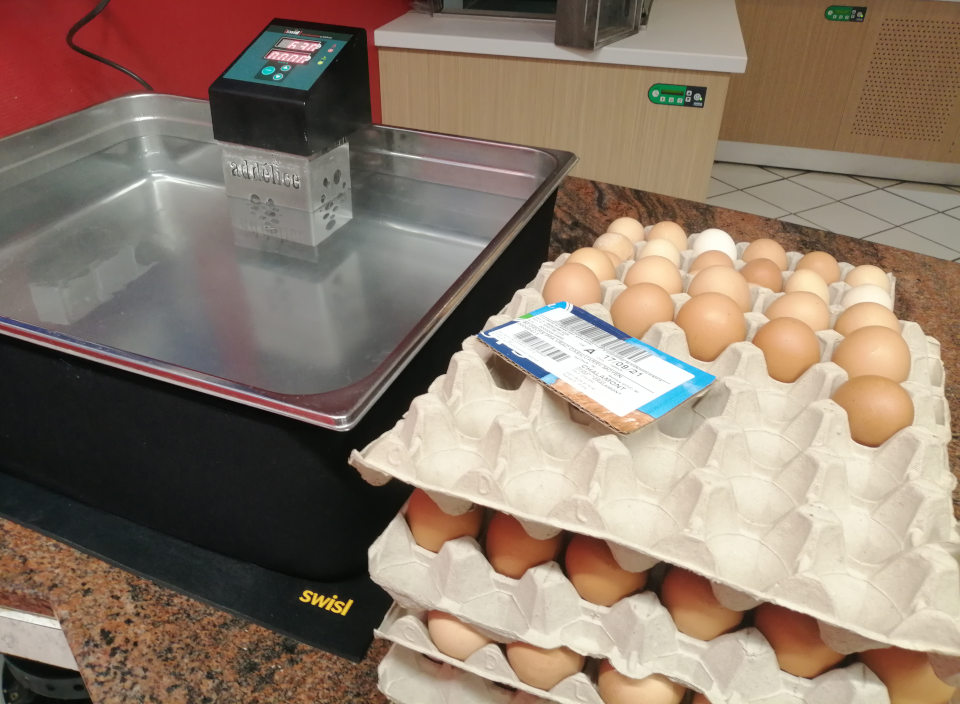
Have you ever picked up a soft-boiled egg from a breakfast buffet, only to discover that the yolk was overcooked or the egg had become hard?
For professional kitchens, the challenge is twofold: cooking large quantities of soft-boiled eggs consistently and preserving their delicate texture throughout the service.
How can you achieve repeatable results, maintain the eggs at the right temperature and meet food safety requirements?
In this article, we explore practical cooking and hot-holding solutions, illustrated by the experience and photographs of Philippe Gaba, a site manager working for a major French contract catering company.
Cooking soft-boiled eggs with an immersion circulator
The ideal temperature and cooking time for the perfect egg will always be a subject of debate. Even small temperature differences can affect the texture of the white and yolk, and every chef has their own preferences.
However, one factor is essential for consistent results: using fresh, high-quality eggs of a similar size. Egg freshness and size play an important role in achieving the same results day after day.
Cooking eggs at 63°C for 45 minutes is a useful starting point for your own trials. Depending on the size and initial temperature of the eggs, this method produces a delicate texture with a creamy yolk and a softly set white.
Unlike a traditional soft-boiled egg cooked briefly in boiling water, this is a low-temperature cooking method, often referred to as a 63°C egg or sous vide egg.
Why use an immersion circulator? By circulating water and maintaining a precisely controlled temperature, an immersion circulator helps ensure even cooking conditions and makes it easier to reproduce consistent results.
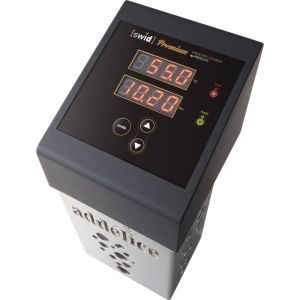
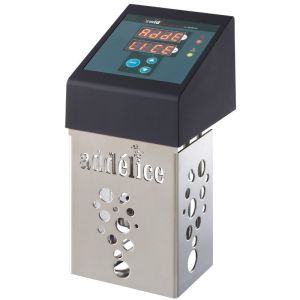
Another major advantage is versatility. A professional immersion circulator such as the SWID can be used in anything from a small cooking pot to a large gastronorm container.
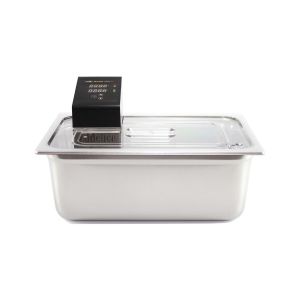
Approximately 100 eggs
A 20 cm deep GN 1/1 gastronorm container can accommodate a substantial number of eggs, depending on their size and arrangement in the water bath.
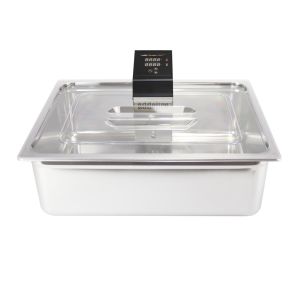
Approximately 200 eggs
A 20 cm deep GN 2/1 gastronorm container is particularly suitable for contract catering, hotels and high-volume food service operations.


Keeping soft-boiled eggs warm at 60°C during service
Once the eggs are cooked, how can you keep them warm without allowing their texture to change too quickly?
One solution is to lower the water bath temperature from 63°C to 60°C using the immersion circulator and keep the eggs in the water during service.
Reducing the temperature slows down further cooking compared with holding the eggs at 63°C. This helps preserve the desired texture for longer, although some gradual changes may still occur.
The final result depends on the holding time, egg size and preparation conditions. We therefore recommend carrying out your own trials to determine how long the eggs retain the texture you want.
Food safety: cooking eggs at 63°C for 45 minutes does not automatically guarantee pasteurisation under all conditions. Likewise, holding eggs at 60°C must be part of a validated food safety procedure, taking into account the product, holding time and applicable HACCP requirements.

How to present soft-boiled eggs on a buffet at 60°C
In contract catering, an immersion circulator combined with a gastronorm container can be a practical and even entertaining way to serve eggs directly to guests.
However, in an upscale hotel or on an elegant breakfast buffet, a large water bath may not be the most attractive presentation.
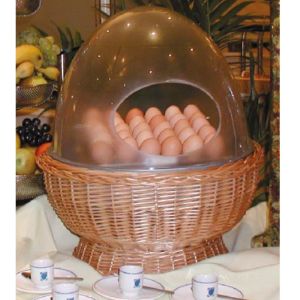
An alternative is to use a dedicated egg warmer for breakfast buffets, sometimes referred to as an egg incubator or egg warming display.

An elegant and practical solution
After being cooked in the kitchen with an immersion circulator, the eggs can be transferred to a dedicated warming display, which may accommodate approximately 30 eggs depending on the model.
These appliances use a ventilation system and a temperature controller to maintain a controlled air temperature set to 60°C.
Egg warming displays are available in different sizes and finishes, including pine wood, stainless steel, silver-plated metal, granite-effect ABS and wicker. They can therefore complement a wide range of buffet styles.


These displays combine the benefits of low-temperature egg preparation with an attractive buffet presentation. However, the actual temperature inside the eggs and the permitted holding time must be verified as part of your food safety procedures.
Serving ideas for eggs cooked at 63°C
Once you have mastered the cooking process, it is time to get creative! Eggs cooked at low temperatures can be served in many different ways, from traditional soft-boiled eggs to more elaborate dishes.
As demonstrated by Philippe Gaba, guests can use a small strainer to lift an egg from the water bath before cracking it into a bowl and adding their favourite accompaniments.
For example, try serving the egg with a red wine sauce inspired by the classic French dish œufs en meurette, or with cancoillotte, a traditional soft cheese from the Franche-Comté region of France.


For guests who prefer a traditional breakfast, simply serve the egg in an egg cup with toasted bread soldiers for dipping.

In summary: for preparing large quantities of soft-boiled eggs and organising an efficient service, an immersion circulator offers a versatile solution. Cooking at 63°C for 45 minutes, followed by holding at a water bath setting of 60°C, provides a useful starting point for texture and service trials, subject to validated food safety procedures.
Whether served directly from a gastronorm container or presented in an elegant egg warming display, low-temperature eggs can become a real highlight of a professional breakfast buffet.
Enjoy!